Skin cello

Skin cello is an experimental cello that was created in 2016 using a wooden cello form and drum skin. This unique instrument expands the range of possible sounds by incorporating the materiality of the skin. The sound of the skin cello is directly affected by the environment and room temperature, resulting in constant changes in its sound. This invites the performer to explore unexpected sounds and requires a new technique to accommodate the instrument’s continuous change in sound. Listen
Circle cello
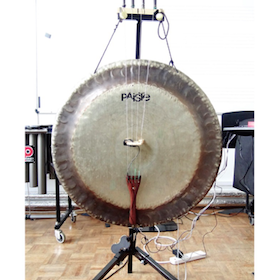
My concept originates from my experiences with the cello. As my relationship with it has evolved, so too has my technique and playing style. I’ve shifted my focus from technique to exploring the sounds I can produce. Instead of playing the “Cello” in the traditional manner, I position myself in front of the instrument. With both hands inverted from their usual positions, I am somewhat limited in traditional cello technique. However, this unconventional approach provides access to various timbres unattainable from the standard cello position.
Safety Pins

This preparation is such a way to create connections of memory, using objects that have a personal resonance (for example ‘dressing’ her instruments in safety pins like those her mother used when she worked extra as a tailor ). or that alter her relationship with her instrument and its long memory of classical performance practice (by disordering it’s sound or its tuning). Click he
Feedback cello
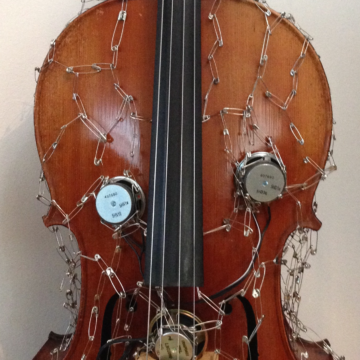
The feedback cello is a collaboration project with composer and sound artist Hardi Kurda in 2014. the idea was to use the cello as a resonance box for five small speakers.
Hand Preparation
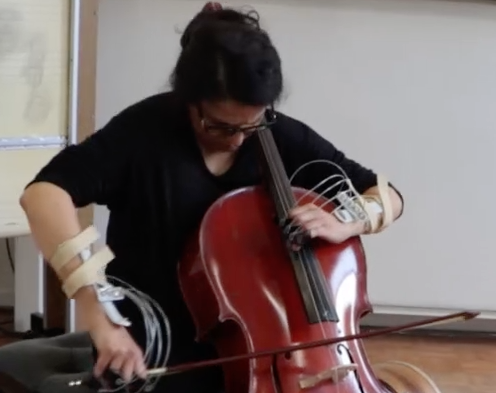
In this project, I use a hand rehabilitation object, typically employed to restore lost functions. Instead, I use it to restrict my hand’s movement. This self-imposed immobility symbolizes socio-political and cultural paralysis, physically embodying societal constraints. By limiting my own mobility, I aim to reflect on these societal restrictions and offer a concrete representation of these often abstract ideas. This work provides a profound commentary on social and political constraints. It critiques the unnoticed societal limitations, rendering complex concepts into a tangible form.
Knot cello

Knotted Strings is a preparation of the traditional cello strings, shaped by experiences of adaptation and solving the problem under conditions of scarcity. When materials were limited, physical adaptations were necessary. broken strings were tied with knots, repaired, and transformed into playable strings. These knots are more than functional; they serve as traces of time, place, resourcefulness, and inventive persistence. The cello becomes a sonic archive of memory and adaptation. Each knot carries echoes of experiences where limitation shaped the possibilities of sound and guided musical invention. The resulting tones are irregular, intimate, and unexpected, sounds that carry the texture of memory itself. The work explores how memory of adaptation and resourcefulness can transform limitations into expressive, resonant sound.
Untitled
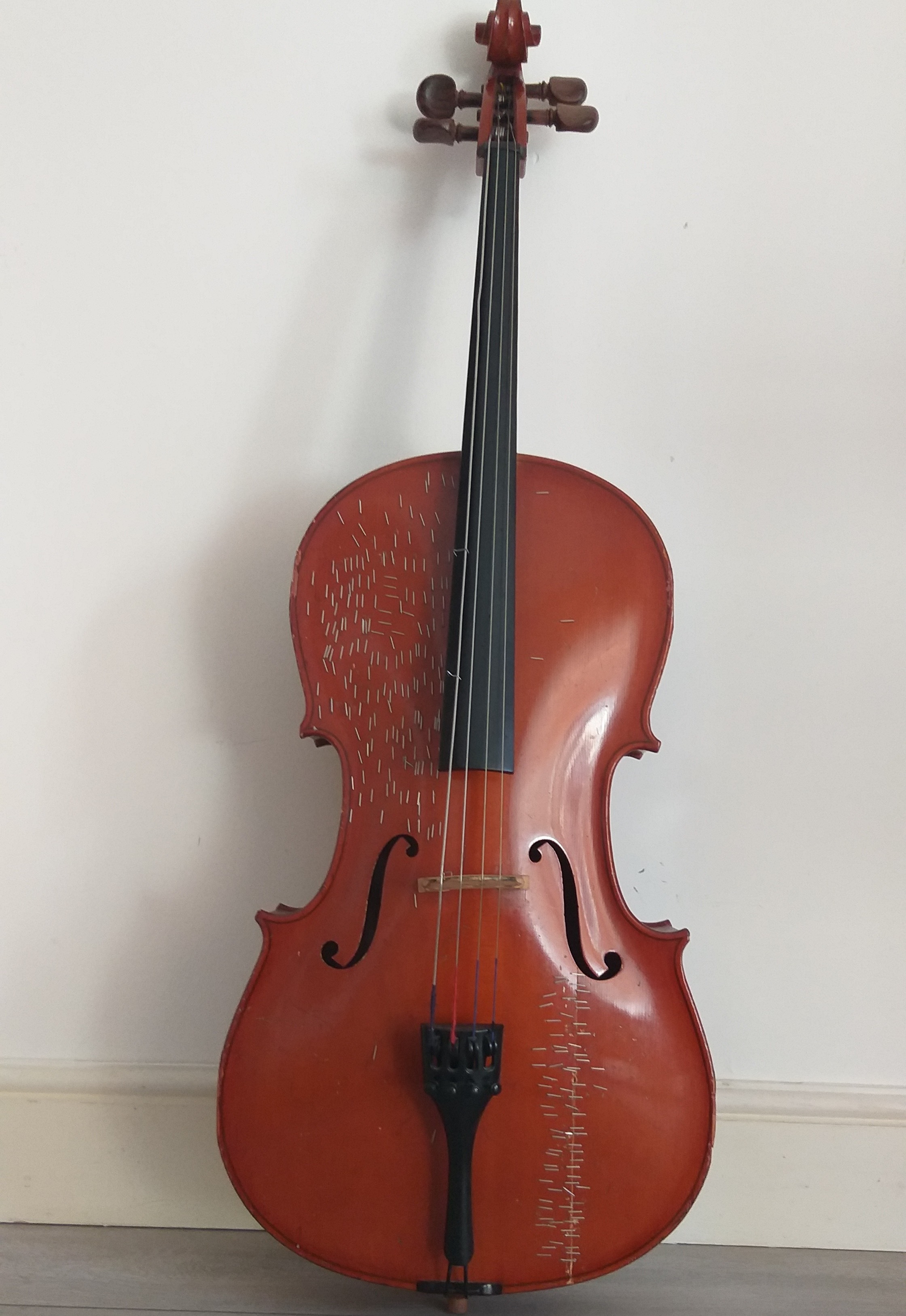
This preparation is a process of negotiation between us.